
Which small SUV gives you more all-weather confidence around Plainfield, IL — 2026 Outlander Sport with AWC or 2026 Trax with FWD?
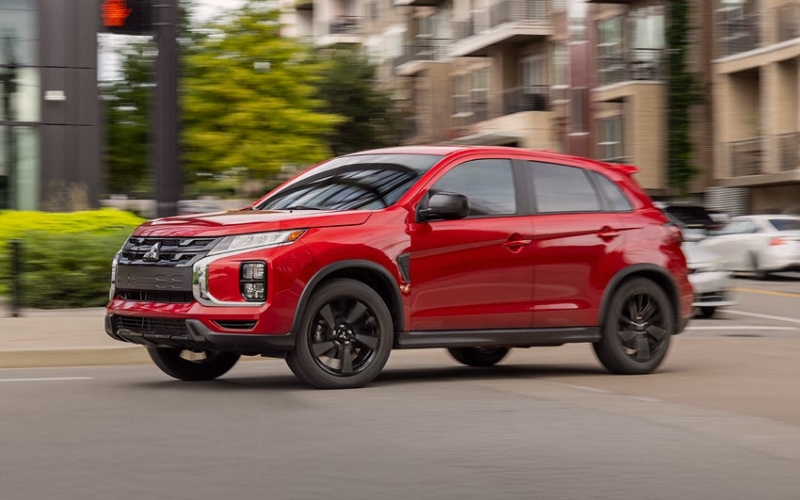
D'Arcy Mitsubishi - Which small SUV gives you more all-weather confidence around Plainfield, IL — 2026 Outlander Sport with AWC or 2026 Trax with FWD?
Shoppers often ask a straightforward question: when comparing a compact SUV with front-wheel drive to one with standard all-wheel control, how much difference will it make during real-world driving around suburbs, interstates, and changing Midwest weather? The key distinctions show up before the first snowflake—on rainy commutes, on crumbly pavement, and on those moments when you need steady footing while merging or making a quick lane change. The Outlander Sport brings standard All-Wheel Control (AWC), a multi-link rear suspension, and 8.5 inches of ground clearance, while the Trax pairs a confident tuning philosophy with a front-drive layout. Both offer modern tech—Apple CarPlay® and Android Auto are in play, and the Trax steps up with available wireless charging and an available 11-inch center HD touch-screen. But capability is the central theme of this comparison, because traction and chassis design help dictate how these features feel on the road.
AWC is always working in the background to help manage torque where grip is strongest, supporting stability as surfaces change. That means fewer traction-light moments leaving damp intersections, a calmer steering wheel on rutted or patched roads, and more predictable acceleration on gravel shoulders. The Outlander Sport’s suspension complements AWC with a MacPherson strut front setup and multi-link rear design—hardware that helps the body stay composed over mid-corner bumps and patched asphalt. By contrast, the Trax’s front-drive approach will feel perfectly pleasant in fair weather, but without an available AWD option, you are relying on the front tires to handle both propulsion and steering duties in poor conditions. That’s the context behind this popular question—traction and ride composure are the foundations for confidence, and you feel the benefits of the right foundation every day.
- Traction and control: Outlander Sport’s standard All-Wheel Control (AWC) supports grip across changing surfaces, while Trax is front-wheel drive only.
- Ride and stability: The Outlander Sport’s multi-link rear suspension helps keep the vehicle settled over rough patches; Trax emphasizes city-friendly tuning.
- Lighting and visibility: Both provide LED headlights, with the Outlander Sport also offering available LED fog lights on select trims for added forward clarity.
- Driver assistance: Outlander Sport includes Forward Collision Mitigation with Pedestrian Detection, Lane Departure Warning, and Automatic High Beam; Trax features Chevy Safety Assist with Automatic Emergency Braking, Front Pedestrian Braking, Lane Keep Assist with Lane Departure Warning, and IntelliBeam®.
- Everyday tech: Outlander Sport includes an 8.0-inch Smartphone-Link Display Audio with Apple CarPlay® and Android Auto; Trax offers an available 11-inch center HD touch-screen, wireless phone integration, and available wireless charging.
- Ground clearance: Outlander Sport’s 8.5 inches supports curb cuts, unpaved access roads, and slushy buildups more confidently than a lower-riding alternative.
Safety plays a crucial role as you balance traction and technology. The Outlander Sport’s standard Automatic High Beam, Rear Seat Alert, comprehensive airbag coverage, Hill Start Assist, and Active Stability Control work with the SUV’s RISE body structure to reinforce crash protection and help you avoid hazards. Trax counters with standard Chevy Safety Assist and helpful visibility technologies. Still, because AWC helps the Outlander Sport maintain poise in the first place, the systems are working in tandem—traction to help prevent a loss of control and driver assistance to help identify and mitigate risks. That layered approach is the reason many parents and commuters gravitate toward an AWD compact SUV for year-round peace of mind.
Longevity and backing also matter. Mitsubishi Motors supports the engineering with a 10-year/100,000-mile Powertrain Limited Warranty, plus additional coverage and roadside assistance, reflecting a brand-level commitment to durability. Trax ownership is straightforward and well supported by Chevrolet’s dealer network, yet it follows a more conventional warranty path. For many shoppers, the warranty difference is a deciding factor, particularly when combined with the Outlander Sport’s standard AWC and robust chassis tuning.
Ultimately, if your routine includes rain, freeze-thaw cycles, and the occasional unpaved detour, the advantages of standard AWC and a finely balanced suspension will show up the first week you drive. If your driving is limited to dry, predictable pavement, Trax remains an easygoing companion with solid tech credentials. For a hands-on comparison drive and a transparent walk-through of features and trims, visit D'Arcy Mitsubishi, serving Plainfield, Shorewood, and Bolingbrook, and let our team tailor a recommendation to your roads, passengers, and priorities.
Frequently Asked Questions:
Does all-wheel control help on rain-soaked city streets or only in snow?
AWC helps year-round by distributing torque to the wheels with the best grip. You feel the benefit leaving wet intersections, crossing paint lines in the rain, and stabilizing acceleration on uneven pavement—well beyond winter conditions.
How do the safety features compare between these two SUVs?
Outlander Sport includes Forward Collision Mitigation with Pedestrian Detection, Lane Departure Warning, and Automatic High Beam, while Trax features Chevy Safety Assist with Automatic Emergency Braking, Front Pedestrian Braking, Lane Keep Assist with Lane Departure Warning, and IntelliBeam®. Both offer strong suites; the Outlander Sport’s traction advantage adds a preventative layer that supports these systems.
Is the ride quality noticeably different on broken pavement?
Yes. The Outlander Sport’s multi-link rear suspension helps the body stay settled over patched and uneven surfaces, enhancing stability mid-corner and during quick maneuvers. Trax feels composed for daily commuting, but its simpler rear suspension and FWD layout have less bandwidth when the surface degrades.