
Which system inspires more all-weather confidence around Bolingbrook, IL — S-AWC on the 2026 Eclipse Cross or AWD on the 2026 Seltos?
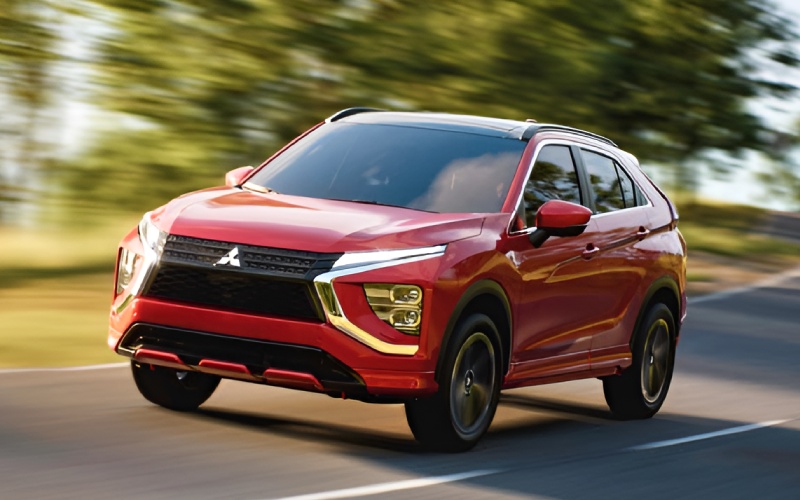
D'Arcy Mitsubishi - Which system inspires more all-weather confidence around Bolingbrook, IL — S-AWC on the 2026 Eclipse Cross or AWD on the 2026 Seltos?
Shoppers often ask which small SUV delivers more poised traction and control in variable Midwest weather. Here is a clear, practical look at how the 2026 Mitsubishi Eclipse Cross with standard Super-All Wheel Control (S-AWC) compares with the 2026 Kia Seltos equipped with its available All-Wheel Drive System with Lock Mode. The short answer: both systems improve grip, but S-AWC layers in integrated stability logic that works continuously to help you follow your intended line on dry, wet, snowy, or gravel surfaces.
On every 2026 Eclipse Cross, S-AWC coordinates throttle, brake-force, and torque distribution side to side and front to rear, using inputs from vehicle sensors to help enhance stability before the driver even notices a change in road feel. That means light steering corrections and a calmer cabin when the pavement is uneven, the crown of the road is slick, or ruts build up after a thaw. Hill Start Assist (HSA) supports confident getaways on grades, and available features like the Multi-View Camera System and Handsfree Power Tailgate remove the stress from parking and loading in tight spaces. The Seltos AWD with Lock Mode can split torque 50/50 at the push of a button to dig in on low-traction surfaces, and that is useful. The difference is that Eclipse Cross keeps S-AWC always on duty, adapting seamlessly as conditions change corner to corner.
- How S-AWC helps in real life: By blending traction control, brake-vectoring, and torque distribution, S-AWC works to stabilize the vehicle proactively.
- What Seltos AWD with Lock Mode does well: Provides an even front-to-rear power split on demand to help you pull away on loose surfaces.
- Why it matters for winter: Consistency. S-AWC is standard, always active, and tuned for the unpredictable mix of snow, slush, and cold, dry patches.
- Driving feel: Eclipse Cross prioritizes a composed ride and steady on-center tracking; Seltos AWD adds traction but is optional on most trims.
Beyond traction tech, both vehicles bring useful safety and convenience. Eclipse Cross includes Forward Collision Mitigation (FCM) with Pedestrian Detection and Lane Departure Warning (LDW) as standard, while Blind Spot Warning (BSW) with Lane Change Assist (LCA) and Rear Cross Traffic Alert (RCTA) are available, as is Adaptive Cruise Control. Seltos offers strong driver-assistance as well, including Auto Emergency Braking and available Navigation-Based Smart Cruise Control with Stop & Go. Where Eclipse Cross pulls ahead for many buyers is the breadth of confidence features made widely accessible, plus Mitsubishi Motors Confidence — highlighted by a 10-Year/100,000-Mile Powertrain Limited Warranty, 5 years of 24-Hour Roadside Assistance, and 2-Year/30,000-Mile Limited Maintenance.
- Key takeaway: If you want AWD that is standard and deeply integrated with stability systems, Eclipse Cross with S-AWC is the decisive choice.
- Who should choose Seltos AWD: Drivers who plan to select upper trims and are satisfied with an on-demand torque split for occasional rough conditions.
Technology and comfort also play a role in daily satisfaction. Eclipse Cross offers Mitsubishi Connect with Safeguard And Remote Services And 24-Month Trial (Enrollment Required) for helpful remote functions, plus available features such as a Heated Steering Wheel, Leather Appointed Seating Surfaces on SEL, and the SE Pano panoramic roof option. The Seltos brings an available Dual Panoramic Display and Bose® Premium Audio on higher trims, along with a Smart Power Liftgate. Both cabins are modern and flexible; Eclipse Cross takes a measured, quiet approach that many commuters find less tiring on longer drives or when the weather turns.
If you are debating these two models, schedule a back-to-back drive to feel how S-AWC influences the Eclipse Cross in quick transitions, mid-corner bumps, and stop-and-go traffic. One route in mixed conditions will often tell the story better than spec sheets and sound bites. D'Arcy Mitsubishi is serving Shorewood, Bolingbrook, and Romeoville with product specialists who can set up that kind of real-world evaluation and explain features in clear, useful terms.
Frequently Asked Questions:
Does S-AWC replace winter tires?
No. S-AWC enhances traction and stability, but appropriate seasonal tires remain the most important upgrade for snow and ice performance.
Is S-AWC always engaged or driver-selectable?
S-AWC operates continuously in the background and can adjust its behavior through driver-selectable modes, helping you tailor response to conditions.
Can the Seltos AWD Lock Mode be used at highway speeds?
Lock Mode is designed for low-traction, lower-speed scenarios. At higher speeds, the system typically reverts to its normal operation for efficiency and stability.
Will I notice S-AWC day to day in dry weather?
Yes, often as subtle confidence: straighter tracking over uneven surfaces, less steering correction mid-corner, and a settled feel over broken pavement.